In Nigeria, natural hair has a rich history deeply rooted in cultural traditions and practices. One historical folktale that illustrates the importance of natural hair care is the story of “The Sacred Oja Tree.” Long ago, in a village nestled within the lush forests of Nigeria, there stood a magnificent Oja tree, revered by the local people for its mystical properties. Legend had it that the leaves of this sacred tree possessed extraordinary healing powers, especially for hair and scalp ailments. The story goes that a young girl named Adanna, known for her luscious locks, encountered a severe scalp condition that caused her hair to thin and weaken. Despite trying various remedies, her hair continued to deteriorate, and she grew desperate for a solution. One night, Adanna had a vivid dream where she was visited by the spirit of the Oja tree. The spirit revealed to her the secret to healthy hair: the nourishing properties of natural ingredients found in the forest. Adanna was instructed to gather specific herbs and plants, such as aloe vera, shea butter, and hibiscus flowers, to create a potent hair treatment. Following the spirit’s guidance, Adanna embarked on a journey through the dense forest, carefully collecting each ingredient with reverence and gratitude. With the help of her community, she prepared a special hair tonic infused with the essence of the Oja tree. Upon applying the tonic to her hair and scalp, Adanna experienced a miraculous transformation. Her hair regained its strength, shine, and vitality, radiating health and beauty once more. Word of Adanna’s remarkable recovery spread throughout the village, inspiring others to embrace the wisdom of natural hair care passed down through generations. From that day forward, the Oja tree became a symbol of resilience, beauty, and the interconnectedness between humanity and nature. The villagers continued to honor the tree, incorporating its teachings into their daily lives and celebrating the natural beauty of their hair. This folktale not only highlights the significance of natural hair care in Nigerian culture but also underscores the importance of traditional knowledge and the healing power of nature’s bounty. It serves as a timeless reminder to cherish and nurture our hair with reverence, drawing inspiration from the wisdom of the past to guide us on our journey to healthy, vibrant tresses. Your hair is your crown, your hairitage, so be bold, be confident, be #BONFIDENT”

Author: Tech Support
Tresses of Tradition: Unveiling the Cultural Significance of Nigerian Men’s Hair
In the bustling streets of Lagos, beneath the shade of baobab trees, and amidst the rhythm of traditional drums, lies a cultural treasure trove woven into the very strands of Nigerian men’s hair. Beyond mere adornment, each curl, twist, and braid tells a story—a narrative of resilience, identity, and cultural pride. Join us on a journey through the vibrant tapestry of men’s hair in Nigeria, where tradition meets modernity, and self-expression knows no bounds. Chapter 1: Roots Run Deep – The Historical Tapestry Step back in time to the era of kingdoms and empires, where hair was more than just a fashion statement—it was a symbol of lineage, status, and spiritual connection. From the Hausa-Fulani horsemen to the Igbo warriors, hairstyles spoke volumes about one’s place in society. Delve into the intricate patterns of the Yoruba “afọ” and the protective allure of the Igbo “okpara,” and uncover the rich tapestry of traditions that have shaped Nigerian men’s hair over the centuries. Chapter 2: Rites of Passage – The Journey to Manhood Embark on a cultural odyssey as we explore the rituals and ceremonies that mark the transition from boyhood to manhood in Nigeria. From the solemnity of the first haircut ceremony, “igbaja,” to the joyous celebrations that accompany elaborate hairstyles, these rites of passage are steeped in tradition and symbolism. Discover how grooming practices instill a sense of pride, belonging, and responsibility in young men, laying the foundation for a lifelong connection to their cultural heritage. Chapter 3: From Tradition to Transformation – The Evolution of Style Witness the metamorphosis of Nigerian men’s hair as it traverses the currents of history and globalization. From the colonial era to the present day, hairstyles have evolved in response to changing social norms, cultural influences, and artistic expressions. Explore the resurgence of traditional hairstyles like the Yoruba “suku” and the fusion of Afrocentric styles with contemporary trends, as Nigerian men reclaim their cultural identity in a rapidly changing world. Chapter 4: The Language of Hair – Social Commentary and Expression Enter the vibrant world of Nigerian barbershops and salons, where hair is more than just a fashion statement—it’s a form of social commentary and political expression. From the “afro” resurgence to the rise of natural hair movements, hairstyles become a canvas for self-expression, empowerment, and resistance against societal norms. Explore how men’s hair serves as a potent symbol of identity, pride, and solidarity in the face of adversity. Chapter 5: Beyond the Surface – Economic and Social Implications Peel back the layers of Nigerian society to uncover the economic and social implications of men’s hair. From the thriving hair care industry to the cultural significance of grooming practices in professional settings, hair plays a pivotal role in shaping perceptions of success, professionalism, and social status. Delve into the complexities of hair politics and the ways in which men navigate societal expectations while asserting their individuality and cultural pride. As we conclude our exploration of the vibrant world of Nigerian men’s hair, let us not merely bid adieu to a subject, but rather embrace it as a mirror reflecting the resilience, diversity, and unwavering spirit of a nation. In every curl, twist, and braid lies a story—a narrative of tradition, identity, and cultural pride passed down through generations. Nigeria, with its rich tapestry of cultures and traditions, celebrates not just hairstyles, but the very essence of what it means to be Nigerian. It is a country where hair is more than just a fashion statement; it is a language spoken in intricate patterns and elaborate designs—a testament to the strength of heritage and the power of self-expression. As we navigate the complexities of modernity and globalization, let us carry with us the lessons learned from Nigerian men’s hair: the importance of embracing one’s roots, honoring tradition, and celebrating diversity. Let us recognize that in a world where identities are often blurred and cultures diluted, our hair remains a steadfast reminder of who we are and where we come from. So, let your hair be your crown, your heritage, and your legacy. Whether you wear it short or long, natural or styled, let it be a reflection of the proud and vibrant spirit of Nigeria—a nation united in its diversity, enriched by its traditions, and bound by the timeless artistry of men’s hair. Your hair is your crown, your hairitage, so be bold, be confident, be #BONFIDENT”
The 5-Step Wash Day That Protects Your Growth
If you have ever finished wash day with hair that felt great for a few hours and then turned dry, tangled and frizzy by the next morning, you are not alone. For most women with natural hair, the problem is not the products. It is the order and the method. Wash day is the foundation of your whole hair routine, and when you get it right, everything else becomes easier: styling, moisture, length retention and even how much time you spend on your hair each week Here is a simple five-step wash day that protects your growth from the very first minute. Step 1: Detangle before you wet your hair. Natural hair is at its most fragile when it is soaking wet, so tackle knots while it is dry or lightly damp. Section your hair into four to six parts and use your fingers first, then a wide-tooth comb. Start from the ends and work upward to the roots. Rushing this step is one of the biggest causes of breakage, so go slowly and be gentle. Step 2: Cleanse your scalp and hair. Your scalp collects sweat, oil, dust and product buildup, especially in a warm climate like Nigeria. Use a sulfate-free shampoo or a gentle black soap shampoo and focus on the scalp rather than scrubbing the lengths. Use the pads of your fingers, not your nails, and let the suds run down the length of your hair as you rinse. This keeps the hair from tangling. Step 3: Deep condition. This is the step that changes everything. Apply your deep conditioner generously from root to tip, cover your hair with a plastic cap, and leave it on for 20 to 30 minutes. If you can, sit under a warm towel or a steamer. A little warmth helps the conditioner penetrate better. Rinse with cool or lukewarm water to help smooth the hair. Step 4: Apply a leave-in conditioner. While your hair is still damp, smooth on a leave-in conditioner. This adds a layer of moisture and slip, making your hair easier to style and protecting it throughout the week. Skipping this step is the number one reason hair feels dry by day two. Step 5: Seal with a butter or oil. Moisture is only useful if it stays in your hair. A natural hair butter creates a light seal over the leave-in and slows down how quickly water escapes. Apply a small amount, focusing on the ends, which are the oldest and driest part of your hair. How often should you wash? For most women, every one to two weeks works well. Washing too often can strip natural oils, while washing too rarely allows buildup to pile up on your scalp. Listen to your hair. If it feels heavy, itchy or limp, it is time to wash. Common wash day mistakes to avoid: Even the best routine will not work if you only do it once and then forget about it. Healthy hair grows when it breaks less, and consistency is what makes the difference. Set aside a few hours each week, put on your favourite music, and treat wash day as self-care rather than a chore. With time, you will notice softer hair, less shedding and visible length retention. Buskam Organics products to use: Shop at bkorganics.comImage: AI generated Lorem ipsum dolor sit amet, consectetur adipiscing elit. Ut elit tellus, luctus nec ullamcorper mattis, pulvinar dapibus leo.
Deep Conditioners, Your Hair Buddy
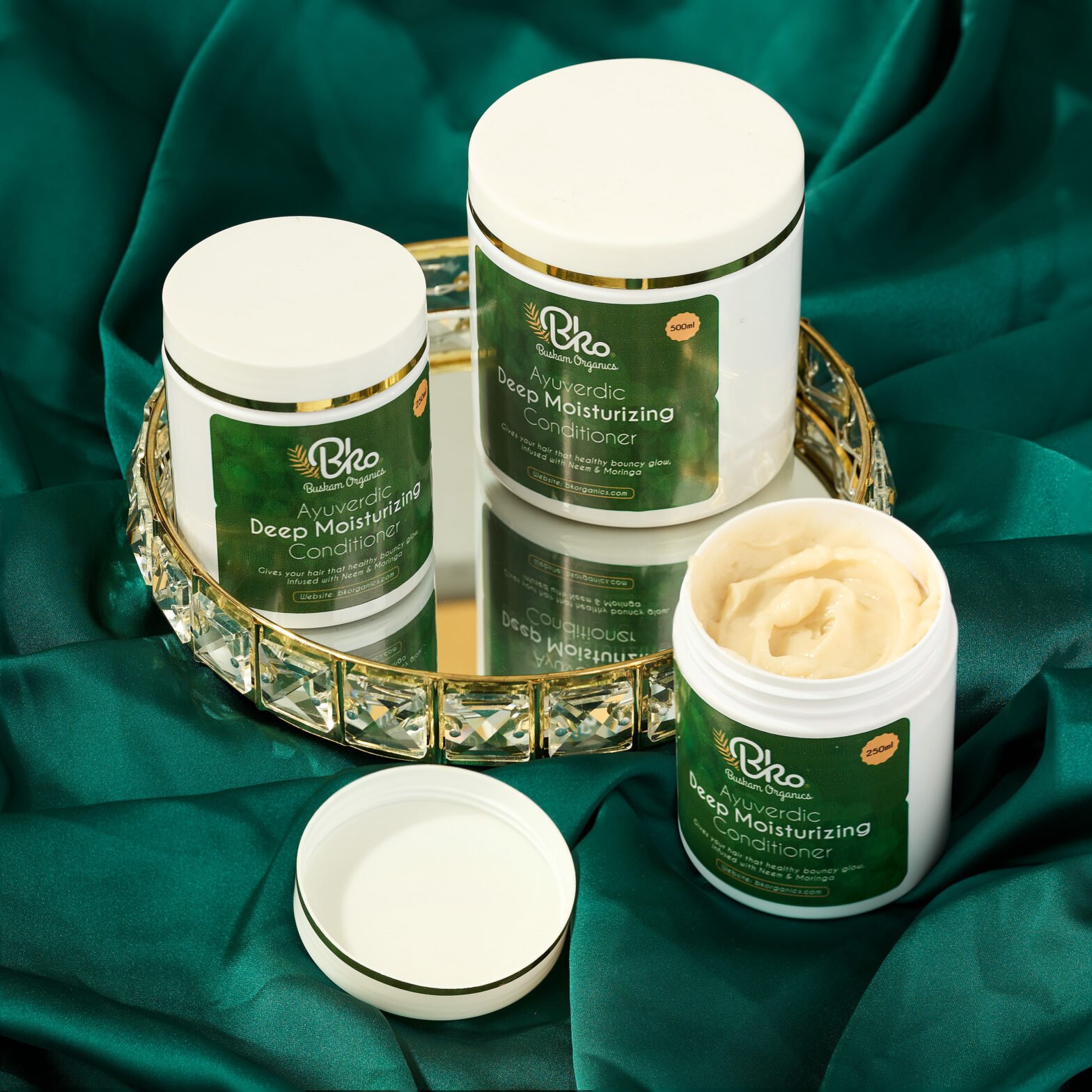
Deep conditioning restores dull, dry hair and bring life back to your hair, it is meant to stay on the hair for longer than your regular hair conditioner(Rinse out Conditioner). A lot of deep conditioners target specific problems, such as a lack of protein from one too many chemical treatments or simply adding a hit of moisture back into your hair. Whatever you need, deep conditioning your hair usually have the answer. In general, deep conditioning is designed to soften, revive, and strengthen your hair, giving your hair a boost that’s much more intense than your normal hair conditioner Deep conditioning is fantastic for giving your hair an extra boost and upping the hair shine. If you have damaged hair, it’s an absolute must if you want to stop hair breakage and bring it back to some resemblance of health. For people with thin, oily hair, deep conditioning isn’t so essential, and you might want to look for a more lightweight treatment Understanding Black Hair’s Unique Needs: Black hair is naturally drier and more prone to breakage due to its tight curls and coils. BUSKAM DEEP CONDITIONER helps replenish moisture, restore elasticity, and strengthen the hair shaft, combating dryness and reducing the risk of breakage. Additionally, deep conditioning treatments can help soften and detangle the hair, making it more manageable and less prone to knots and tangles. Benefits of Using BUSKAM Deep Conditioner: 1. Moisture Restoration: Deep conditioning treatments penetrate the hair shaft, delivering moisture deep into the hair’s cortex. This helps hydrate and nourish the hair from within, leaving it soft, supple, and more resistant to breakage. 2. Strength and Elasticity: Protein-rich deep conditioners help strengthen the hair shaft, improving its resilience and elasticity. This reduces the risk of breakage and promotes length retention, allowing you to grow longer, healthier hair over time. 3. Damage Repair: Deep conditioning treatments can help repair damage caused by heat styling, chemical treatments, and environmental stressors. Ingredients like hydrolyzed keratin, collagen, and amino acids work to fill in gaps in the hair cuticle, smoothing roughness and restoring shine and vitality to the hair. Incorporating Deep Conditioning Into Your Routine: To reap the full benefits of deep conditioning, it’s essential to incorporate it into your regular hair care routine. Follow these steps for optimal results: 1. Choose the Right Product: Look for deep conditioning treatments formulated specifically for black hair, with nourishing ingredients like shea butter, coconut oil, and avocado oil. Consider your hair’s needs, such as moisture vs. protein, and select a product accordingly. 2. Application Technique: Apply the deep conditioner evenly to damp hair, focusing on the mid-lengths and ends where hair tends to be driest and most damaged. Use a wide-tooth comb or your fingers to distribute the product evenly and ensure thorough coverage. 3. Heat Activation: For maximum penetration and effectiveness, use heat to activate the deep conditioner. You can do this by covering your hair with a plastic cap and sitting under a hooded dryer or using a warm towel or shower cap to trap heat and enhance absorption. 4. Rinse Thoroughly: After the recommended treatment time, rinse the deep conditioner thoroughly with lukewarm water to remove any residue. Follow up with the BUSKAM leave-in conditioner or moisturizer to seal in moisture and add additional hydration. Deep conditioning is a vital component of a healthy hair care routine for black women and men. By nourishing and revitalizing the hair from within, deep conditioning treatments help maintain moisture balance, strengthen the hair shaft, and promote overall hair health. Incorporate deep conditioning into your regular routine to unlock the full potential of your hair and achieve long-lasting results. “Your hair is your crown, your hairitage, so be bold, be confident, be #BONFIDENT”